Introduction
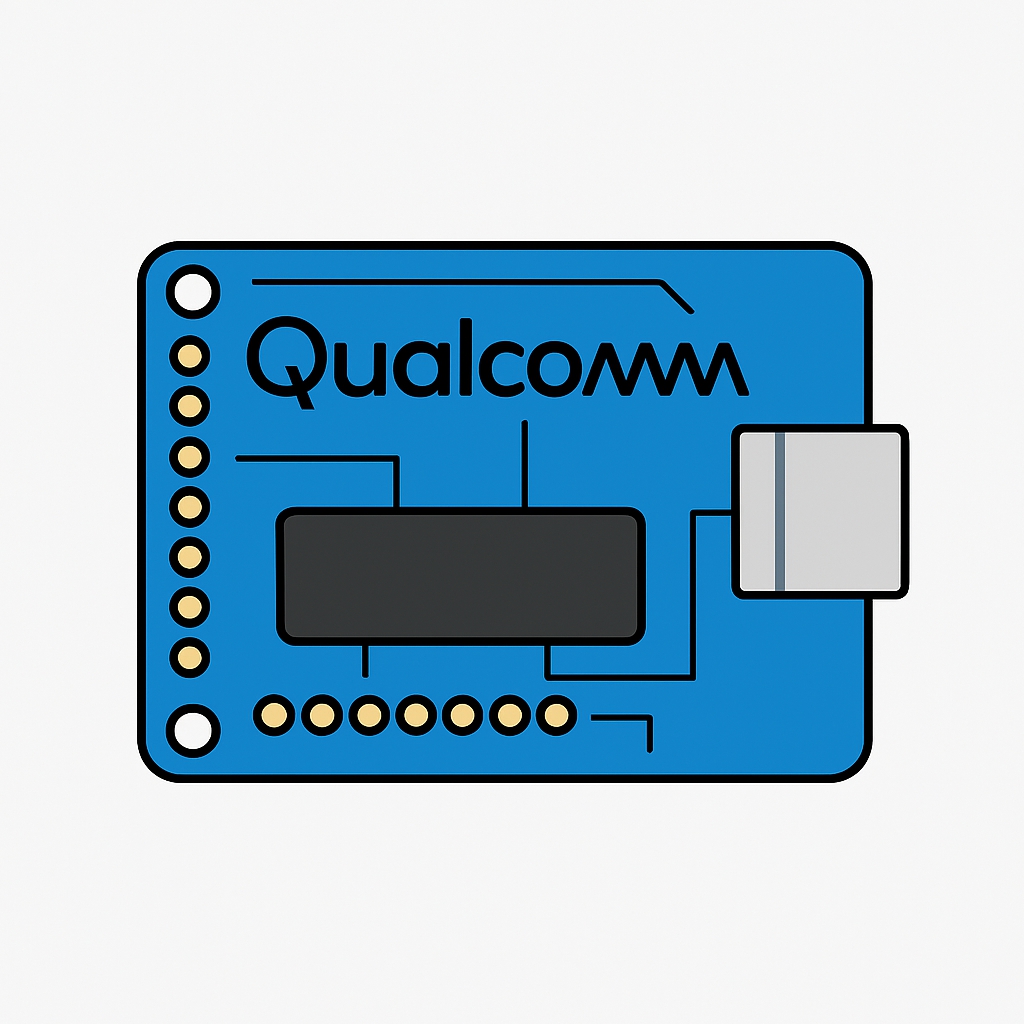
On October 7, 2025, Qualcomm announced its acquisition of Arduino, the open-source microcontroller pioneer with a global community of 30-plus million users. Arduino says the brand and open ethos will remain, and the deal still requires regulatory approval. Alongside the news, the companies unveiled the Arduino UNO Q, a dual-brain board that pairs a Qualcomm application processor with a low-power STM32 microcontroller, plus a new App Lab IDE aimed at Linux, RTOS, and Python workflows.
The big picture
From hobby table to factory floor. Qualcomm’s play is to turn Arduino, already the de facto on-ramp to embedded systems, into a broader “edge AI” funnel that stretches from weekend projects to commercial products and industrial IoT. Expect tighter links between Arduino hardware/software and Qualcomm’s AI toolchains, vision/audio accelerators, connectivity stacks, and cloud partners.
Arduino stays Arduino. Public statements emphasize continuity: open-source hardware/software, cross-vendor support (not just Qualcomm chips), and community stewardship. Branding remains independent. That reassurance matters for classrooms, labs, and makerspaces that rely on Arduino’s approachable ecosystem.
What changes for your bench
1) New performance tier, without abandoning “blink”
The UNO Q brings Linux, GPU-class graphics, and on-board AI inference to a form factor the community knows, yet it still includes a microcontroller for deterministic I/O. In practice, this means running camera pipelines, lightweight LLMs, or audio DSP on the app processor while the MCU handles precise timing for sensors and motors. The prices are $44 for the 2 GB/16 GB model and $59 for the 4 GB/32 GB model.
2) A smoother path from prototype to product
Qualcomm’s silicon catalog (wireless, vision, power) plus acquisitions like Foundries.io and Edge Impulse give Arduino projects a clearer upgrade path: start with UNO Q + App Lab, then transition to module-based designs or SOMs with long-term support. For small teams, that could cut months from proof-of-concept to pilot.
3) Tooling that speaks both “Arduino” and “Linux”
App Lab aims to bridge Arduino-style sketches with Linux apps, Zephyr/RTOS, and Python, which is useful if you’ve outgrown single-core MCUs but don’t want the friction of switching ecosystems. Expect better debugging, package management, and model deployment workflows out of the box.
What probably won’t change (and why that matters)
- Community libraries and shields should remain compatible; Arduino explicitly says its platform will continue to support multiple chip vendors. That helps protect your existing code and course material.
- Open designs and permissive licensing are core to Arduino’s identity and are being reiterated post-announcement. Keep an eye on contributor policies, but wholesale licensing shifts look unlikely in the near term.
Sensible cautions for makers
- Availability vs. hype. Early boards can sell-out and software can lag, so plan buffer time before committing to demos or curricula. The companies say pre-orders are open now, with first shipments in October/November and more by year-end. Verify dates for your region.
- Watch licensing fine print. If you release commercial add-ons or redistribute firmware blobs, double-check new SDK terms, especially around AI accelerators and wireless stacks where proprietary bits are common. (This is a general best practice; no adverse changes have been announced.)
- Vendor lock-in concerns. Arduino and Qualcomm say cross-vendor support continues, but keep your designs portable: abstract hardware, avoid one-off proprietary APIs unless you need them, and maintain MCU-first fallbacks.
Who benefits most, right now?
- Educators & beginners: Same approachable entry point, plus a migration path to AI/vision without jumping ecosystems.
- Robotics & edge-AI tinkerers: On-board acceleration, camera/audio pipelines, and Linux packages (OpenCV, PyTorch-lite style stacks) on a board that still does hard-real-time I/O.
- Startups & SMEs: Faster prototyping → pilot hardware using a parts catalog and partners already aligned with Arduino.
Practical next steps for the community
- Evaluate UNO Q for your use case. If you’ve hit the ceiling on Cortex-M sketches, the dual-brain approach may simplify your stack. Check RAM/eMMC options (2 GB/16 GB or 4 GB/32 GB).
- Kick the tires on App Lab. Try deploying a vision or audio model and measure end-to-end friction vs. your current flow.
- Design for portability. Keep HAL layers clean and prefer standards (POSIX, Zephyr drivers, CMSIS, Arduino Core APIs). If you must use a Qualcomm-specific accelerator, gate it behind feature flags. (General guidance informed by acquisition statements that brand independence and multi-vendor support continue.)
- Stay plugged into policy updates. Follow Arduino’s blog and the official announcement page for any post-closing changes.
Conclusion
For makers, this looks less like an extinction event and more like a bigger runway: Arduino’s user-friendly on-ramp meets Qualcomm’s horsepower and supply-chain muscle.
If promises around openness and vendor inclusivity hold, the community gains new headroom, especially for edge AI, robotics, and connected devices, without losing the low-friction experience that made Arduino the first board so many of us ever loved.
Sources: GsmaIntelligence.com. TechRadar. The Verge. LED Professional. Arduino Blog. Electronic Design. TechRadar. Reuters. Tom’s Hardware.